The Basement That Looked Fine on Camera
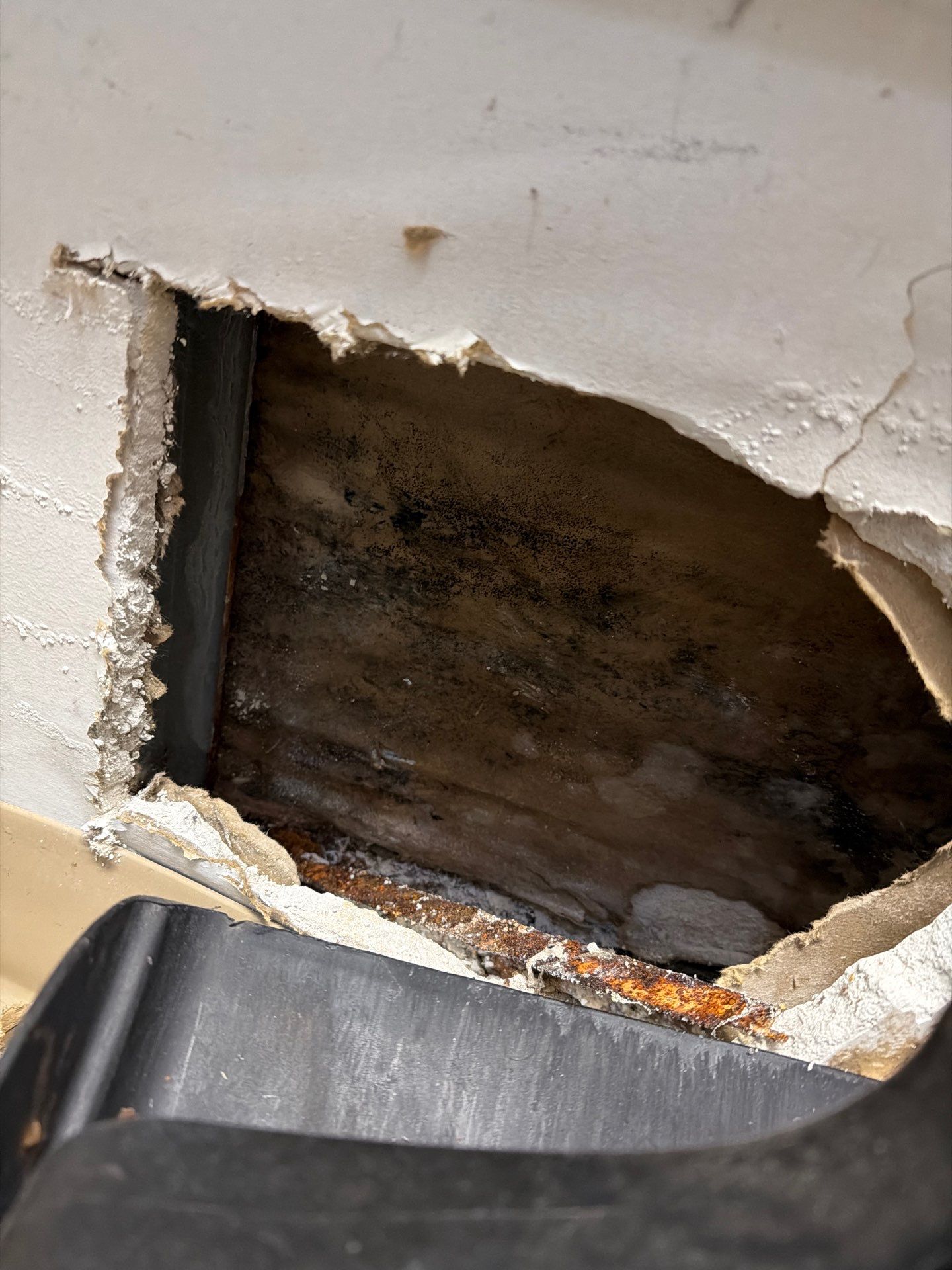
One Viking Meadows homeowner called us after her allergist suggested mold might be triggering her son's worsening asthma. The basement looked clean. No staining, no musty smell that she could detect, just a finished playroom her family used every weekend. She had already paid for a video inspection from another company that found nothing. We brought in a third party industrial hygienist for air sampling before touching anything. The interior spore count came back at roughly 4,200 spores per cubic meter of Aspergillus and Penicillium, while the outdoor control sample sat near 800. That ratio, more than five to one, signaled a hidden source.
We pulled a baseboard behind the entertainment center and found wet insulation from a slow foundation seep. The drywall cavity was colonized. Without air testing, we would have had no reason to open that wall. After remediation, with HEPA filtration running and the affected materials removed, the post test clearance came back at 620 spores per cubic meter, lower than the outdoor reading. Her son's symptoms eased within three weeks. That is what good mold remediation after water damage should accomplish, and the air data is how we prove it.
The Attic That Did Not Need Remediation
A Viking Meadows family was about to spend twelve thousand dollars on attic mold treatment based on a real estate inspector's report. They called us for a second opinion. We climbed up, looked at the staining, and were honest with them. The discoloration pattern matched old condensation marks from a previously corrected ventilation issue, not active growth. Still, we recommended air testing to be sure. Spore counts inside the attic matched outdoor levels almost exactly. No remediation was warranted. We charged them for the inspection and the sampling, nothing more, and wrote a letter for their buyer. If we cannot help, we will tell you directly. That principle has cost us short term revenue more times than I can count, and earned us long term referrals every single time.
The buyer's agent actually called us a week later to confirm our findings were independent. We sent over the lab chain of custody and the hygienist's credentials. The sale closed without a price reduction, and the family kept their twelve thousand dollars in the bank where it belonged. Two months after that, the same agent referred a different client to us for a kitchen leak assessment. Honesty travels in Viking Meadows faster than people realize.
When Testing Is Not Worth the Cost
Not every situation needs lab work. A small bathroom ceiling spot from a known shower leak, fully visible, easily removed, generally does not require pre testing. A whole house concern after a major flood almost always does. Our Viking Meadows Water Restoration estimator will walk your home, look at the moisture history, and tell you honestly whether sampling will change the scope or just add cost. Free assessments are exactly that, free, and they include a straight answer about whether you need testing at all.
Post-Remediation Verification, the Step Too Many Skip
Here is where some contractors fall short. They remove the mold, take down containment, hand you an invoice, and leave. We do not consider a job complete until the post remediation verification sample clears. That means an independent hygienist returns after our work is done, while our HEPA air scrubbers are still running, and pulls another set of samples. The lab compares them to outdoor controls. Spore counts should be at or below outdoor levels, and indicator species should be absent or trace.
One Viking Meadows basement we worked on last spring had post test results that came back marginal on the first try. The visible work was perfect, but a small amount of cross contamination had escaped containment into an adjacent storage area. We went back, cleaned that area, ran additional filtration for 48 hours, and retested. Second clearance passed. The homeowner paid nothing extra. That is how the standard is supposed to work, and it ties back to the same principles we follow for water damage restoration across every Viking Meadows project.
What Pre-Remediation Testing Actually Measures
When our hygienist sets up an air pump in your Viking Meadows home, we are capturing a snapshot of what your family breathes. The standard practice involves at least one outdoor control sample and one or more interior samples from the suspect areas. The lab counts spores by genus and reports them per cubic meter. We look at three things:
- Total spore counts compared to the outdoor baseline
- Presence of water damage indicator species like Stachybotrys, Chaetomium, and Ulocladium
- Distribution patterns that suggest a hidden moisture source versus a contained surface issue
If indoor counts exceed outdoor by a meaningful margin, or if indicator species appear indoors but not outdoors, we have documented justification for remediation. Insurance carriers respect that documentation. So do real estate attorneys. So do pediatricians.
How Quickly We Can Get Sampling Started
When a Viking Meadows family suspects active growth and someone in the home is symptomatic, waiting a week for results is hard. We dispatch an assessor within 2 hours in most cases, walk the property the same day, and coordinate the hygienist visit within the next business day whenever the schedule allows. Lab turnaround for standard spore trap analysis typically runs two to five business days, though rush processing is available when a real estate closing or a medical concern demands it. The faster we move on the front end, the faster you get answers and the faster your family gets back to normal.
The Crawl Space and the Insurance Claim
A Viking Meadows couple discovered their crawl space had been damp for years after a slow plumbing leak. By the time we arrived, the joists showed visible growth. Their insurance adjuster asked for pre remediation air sampling to establish scope. We coordinated the testing, found elevated Stachybotrys spores in the living space above the crawl, and used that data to support a claim covering full remediation plus contents cleaning. Without pre testing, the carrier likely would have paid only for the visible surface work. The connection between crawl space moisture and indoor air quality is documented in our guide on how fast mold grows after water damage, and the 48 hour rule is exactly why we recommend testing whenever a leak has gone undetected for weeks.
The same couple later asked us whether their soft furniture upstairs needed to be discarded. Because the air data showed elevated indicator species in the bedroom directly above the crawl, we recommended professional cleaning of the mattress and upholstered chairs rather than throwing them out. The insurance carrier covered that line item too, again because the sampling gave the adjuster a defensible reason to approve it. Data turns judgment calls into documented decisions.